YOUR FURNITURE—— —— ——
COLLECTIONS. MATERIALS. DETAILS.Furniture
to your interior.
to your interior.
M↗
Help customers picture your furniture in their space, compare dimensions and finishes, and find out how to order. We design websites for furniture makers that make key information easy to find and the next step clear. Start with 3 free design concepts before you commit to development.

Explore three design concepts before you commit to the website build.
No deposit or signed contract is needed to see your design concepts.
Choose a direction or walk away. There is no obligation to continue.
SEO/SEM EXPERIENCE. TALK ABOUT YOUR PRODUCTION.
I bring over 17 years of SEO and SEM experience, including work with more than 200 clients across Poland and Europe. I apply that experience to website planning: helping people find the site, understand what you offer, and take the next step. The brands and figures shown refer to my SEO and SEM work.
We discuss your collections, options, and sales process. Do customers order custom furniture, buy ready-made pieces, or source products for a showroom? We identify what they need before getting in touch: details, specifications, finished projects, delivery terms, or wholesale information. That shapes the pages, content, and features.

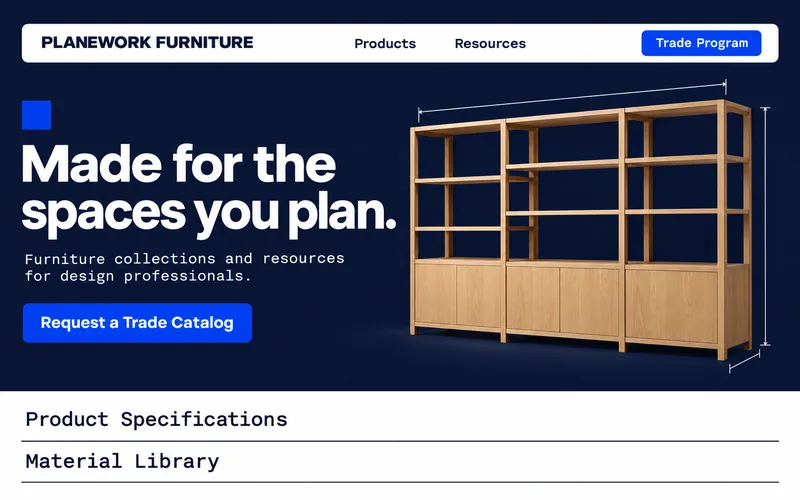
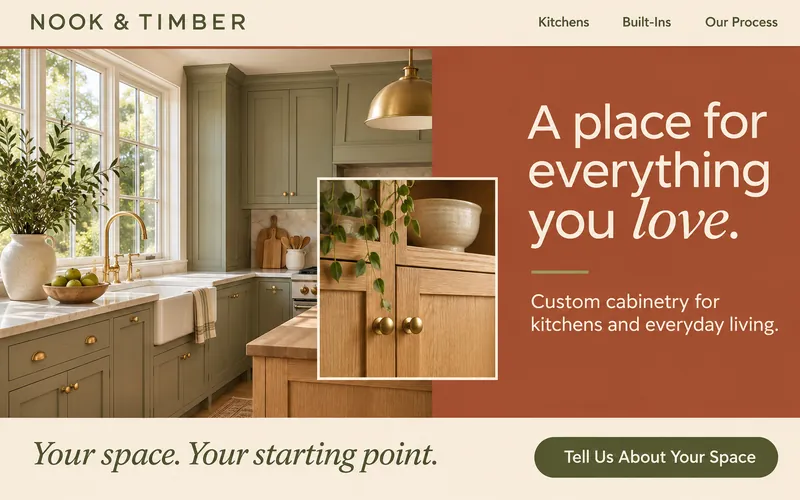
6 CONCEPTS FOR FURNITURE MANUFACTURERS
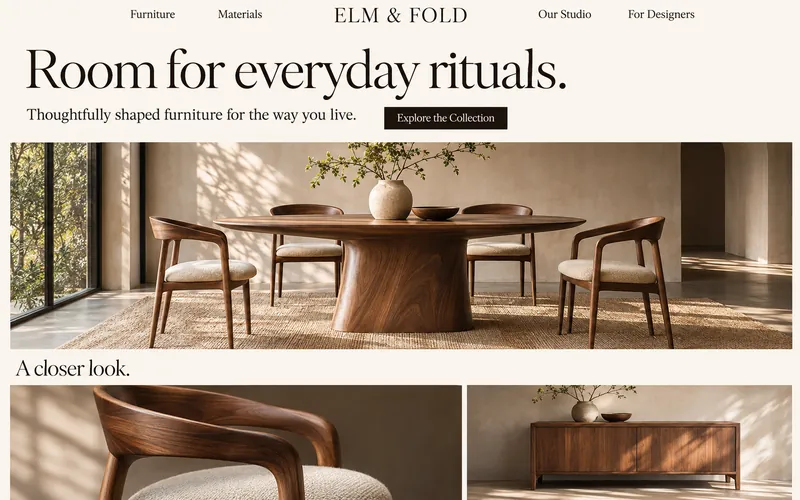
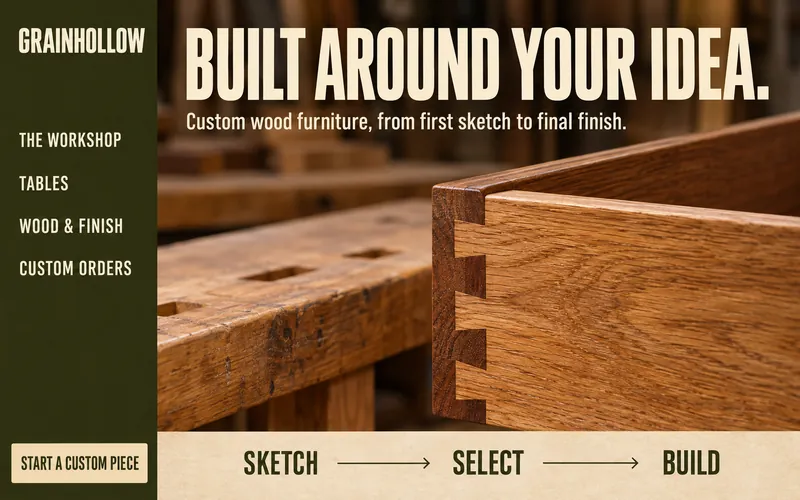
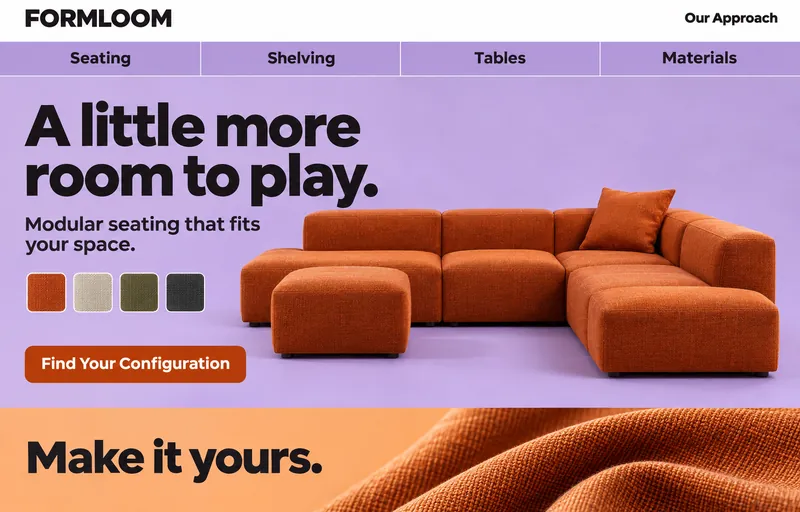
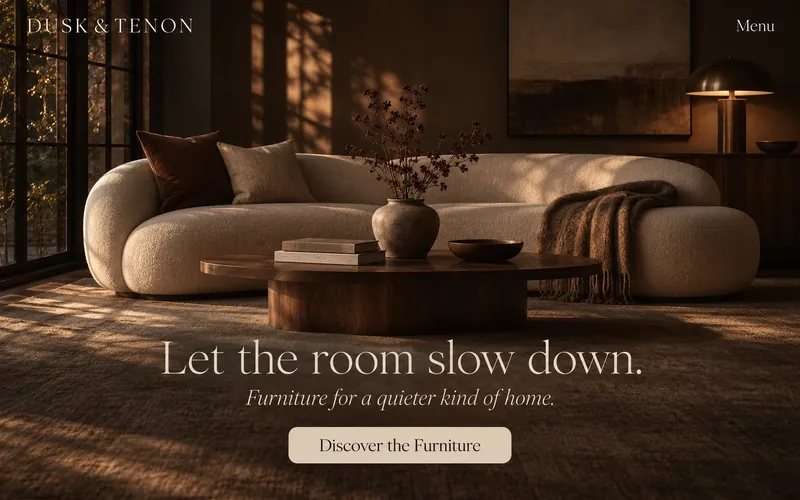
YOUR PRODUCTION. YOUR AUDIENCE.
The collection catalog, what you offer of custom-made furniture and collaboration with distributors require different information. We plan the website around what you actually produce, who you sell to and how you take orders.
We will show collections, types of furniture and specific models. Dimensions, materials and variants will facilitate comparison. When selling through partners, we will indicate showrooms; in the case of direct sales, we will agree on the route to the inquiry or the scope of the store.
Kitchens, wardrobes, dressing rooms or premises equipment can be presented through photos of completed works and descriptions of solutions. We will explain the process from measurement to installation and the actual coverage. The form will help you collect information for the initial conversation.
The distributor, architect and investor need data about what you offer, production possibilities and working arrangements. We will plan a separate B2B path, downloadable catalogs and proper contact. We will select languages and files for designers according to the markets we serve.
FROM INSPIRATION TO MODEL SELECTION.
A typical visitor might go from your home page to a collection, a product page, and then an inquiry or showroom details. Custom furniture buyers may explore completed projects and your process first. We choose pages based on the size of your range and how you manage updates.
We will arrange sofas, tables, wardrobes and kitchens according to the actual assortment. The furniture card can show dimensions, materials, finishes and available variants. We plan the search engine and filters when they help find a product in a larger offer.
We pair room photos with details and captions showing the furniture type, materials, and work involved. We distinguish finished project photos from renderings. Visitors can move from an inspiring example to the relevant collection or an inquiry.
We will present the production method, confirmed information about quality and possibilities of collaboration. A separate page for showrooms, architects or investors may contain PDF catalogs, technical sheets and design files that you actually share.
We will show sales points, hours and contact details of the relevant department. We will explain whether the customer buys directly, through a showroom or orders a custom quote. We will describe delivery, assembly and deadlines according to your rules.
WHAT YOU GET.
We will agree on the catalog structure, content and features needed by your company. The scope will determine the number of product pages, content editing tools and materials to be prepared. The store, configurator and connections with other systems require separate arrangements.
We will combine the logo, colors and photos of the collection with a clear layout. Three free concepts will allow you to compare the directions of furniture presentation before deciding on website development.
The customer should conveniently view the details, read the parameters and find the contact also on a phone. We check the menu, buttons, tab layout and keyboard operation.
We plan product categories, individual product pages, and links to completed projects. Your quote defines the number of products and variants, copy editing, and data entry included. Your company approves all specifications.
We organize collection addresses, titles, headers and links between products. We will take into account the actual scope of what you offer. We discuss ongoing SEO, new content and campaigns separately.
We will select the form, telephone number and contact details for partners. Filters, additional languages, store or integration with PIM, ERP or CRM require determining the scope and checking the supplier's capabilities.
Before starting, we verify product data, links and contact details. After approval, we provide your login details. We discuss catalog editing, maintenance and responsibility for updates.
CONTACT ADAPTED TO THE METHOD OF SELLING.
A person choosing a sofa needs different information than a buyer looking for a manufacturer for a chain of showrooms. We will plan contact with the right offer and explain the next step. Not every catalog website needs a shopping cart.
A contact with the name or symbol of the model can be placed next to the product card. The agreed fields will help indicate the variant and number of pieces. Thanks to this, the conversation can start with a specific piece of furniture.
The form may ask about the type of development, approximate dimensions, location and expected scope. We will determine file handling separately. We will show that the measurement and final quote follow your process.
The partner will find contact information for the sales department, a description of collaboration and current materials. If you are using an order portal, we can arrange for you to go there. Data exchange with the website is a separate scope.
When selling through showrooms, we will provide a list of points and appropriate contacts. When selling online, we will agree on variants, delivery, payment and order processing. The configurator requires additional recognition of data and rules.
PARAMETERS, DETAILS AND REAL MATERIALS.
A photo of the interior helps to imagine the furniture, but does not explain its size, finish or how to order it. We combine images with the information needed for selection. The editing access descriptions and preparing materials is determined before development begins.
Collect a collection list, model names and symbols, dimensions, materials and variants. We will agree on a consistent way of recording them. If you have data in a spreadsheet or product system, we will check the possibilities of using it on the website.
Photos of entire furniture, close-ups of finishes and interior examples will be useful. We will select materials with the right to publish. We will mark visualizations according to their nature; we will not present them as photos of completed projects.
Describe what the customer can change, what the choice of materials is and what the pricing depends on. For custom-made furniture, we will show the sequence of measurement, design, production and assembly. Date information must match your services.
We will add PDF catalogs, manuals and files for architects if you share them. We will determine who updates collections and discontinued models. We will plan the blog or additional languages and take responsibility for their maintenance.
SEE THE DESIGNS. THEN DECIDE.
Compare three concepts for the appearance and layout of a furniture manufacturer's website. You will see different ways of presenting the collection, details and ways to make an inquiry. This stage is free of charge, without a contract or deposit.
A short description of the company is enough: what furniture you produce, who you sell it to and what you want to change. You can provide your current website and product examples. You don't need a detailed brief; suggestions will help you choose your direction.
The free concepts show possible designs and layouts. Building and launching your website is a separate, paid stage that begins only after you approve the scope and price.
CATALOG, CONTENT AND FEATURES - PRICE AND SCOPE.
The price of a website for a furniture manufacturer depends on the design, number of product pages, variants, materials and features. After the conversation, you will receive a custom quote. The scenarios below show the differences in scope; they are not ready-made price packages.
For a company with a limited range of services or a custom-made furniture studio. One page shows your specialization, selected jobs and how to start a conversation.
For a manufacturer presenting several collections. Categories and model cards organize what you offer, and galleries and contact information lead to an inquiry or a showroom.
For a company that needs a larger catalog, several languages, a store or connections to systems. Pricing depends on data and agreed features.
The website build and ongoing maintenance are priced separately. Your quote covers the pages, products, content, features, timeline, and revisions. Domain registration, hosting, renewals, and licenses have separate costs. Website support, new collections, translations, and marketing are scoped separately. Your first 3 design concepts are free.
FOUR STAGES. CLEAR ARRANGEMENTS.
We start with the sales model and product materials. The schedule depends on the scope of the catalog, features and time for your approval. We confirm the price and terms of paid website development before starting this stage.
We discuss your collections, customers, and ordering process. If you have a website, we review product information and URLs to keep. We then agree on the pages, photos, and features needed.
We present three free design and layout concepts. You compare how each one presents your furniture and guides customers and business partners. You share feedback and decide whether to proceed with development.
We confirm the price, scope, deadline and revisions. We develop the selected project and introduce agreed products, content and features. You confirm the parameters and information about the method of sale.
We verify mobile layouts, directory, links and route to the query. After approval, we launch the website and provide your login details. We discuss product edits, renewals, and follow-up support.
VISIBILITY, MAINTENANCE AND NEXT STEPS.
A new model, a change of finishes and another showroom should have their place on the website. We will determine how to update the catalog and further expand it. We discuss additional features and new markets according to your company's plans.
Collections, product pages and information about actual coverage form the basis for ongoing marketing. We can discuss SEO and Google Ads separately. Just making a website doesn't guarantee rankings, sales or inquiries.
Before rebuilding, we will review the addresses of collections and products and the necessary redirects. We will arrange domain switching, hosting and email storage. We will check how to transfer the catalog and current links to sales points.
We will choose the method of adding models, variants and files. You can choose to manage content yourself, individual changes or curation. Additional languages, translations and integrations with product data require separate arrangements.
REVIEWS
Feedback on the ideas, communication, and details that make a difference.
Łukasz really understood my business. The website feels clean and elegant, and it highlights what matters most.

DIRECT COLLABORATION
Website design backed by SEO and SEM experience.
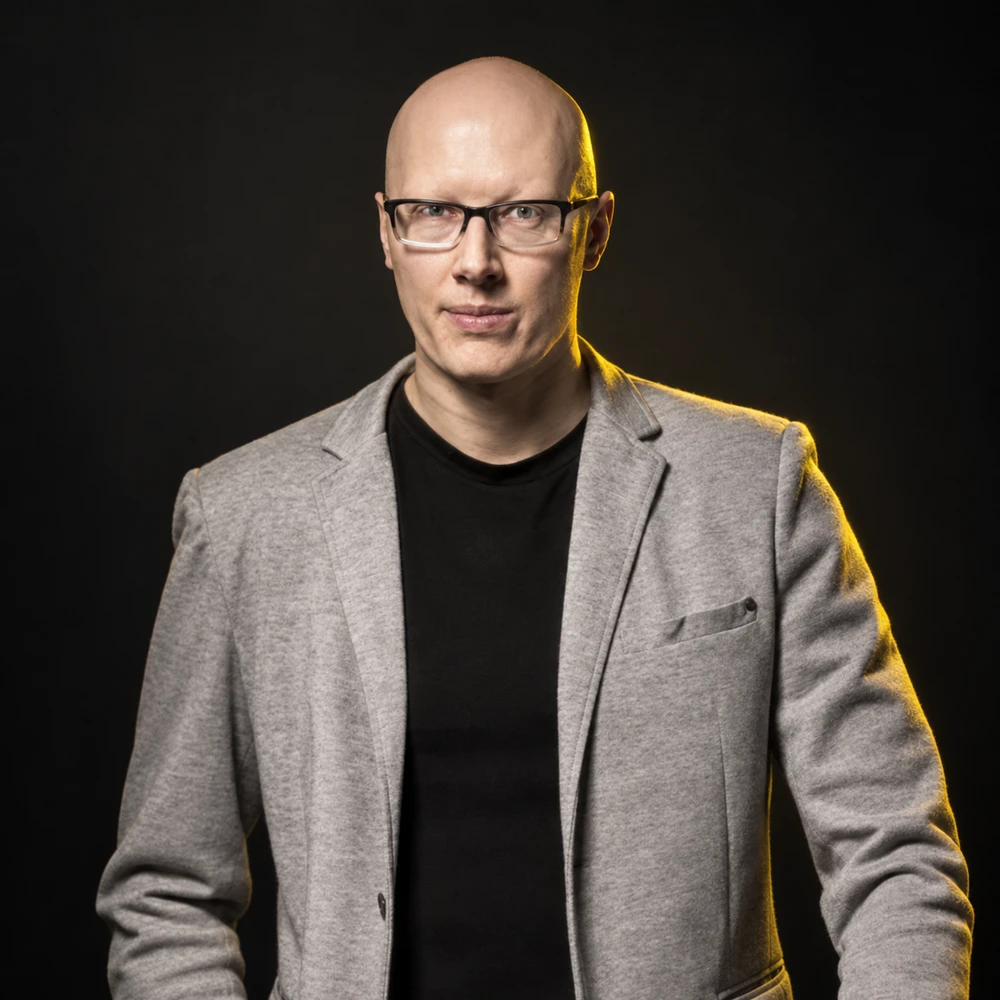
I’m Łukasz Zaborski. I bring over 17 years of SEO and SEM experience, including projects for more than 200 clients across Poland and Europe, to each website I create. I consider how people find your business, compare services, and decide to get in touch.
At zaborski-pro.com, you work directly with me. I'm based in Poland and work remotely with U.S. businesses. Tell me about your services, current website, and goals. We'll agree on a scope that fits your business and coordinate communication around your time zone.
Tell Me About Your BusinessYOUR BUSINESS. YOUR INDUSTRY.
Choose your industry. Explore website ideas, features, and answers to common questions.
QUESTIONS BEFORE YOU START
Answers about the catalog, pricing, photos and ordering method.
Yes. Your three initial design and layout concepts are free, with no deposit, contract, or obligation to continue. A brief description of your business and goals is enough to start. Building and launching the website is a separate, paid stage that begins only after you approve the scope and price.
We prepare a custom quote for your project. It is influenced by the number of products and pages, variants, design, content and features. Data import, store, configurator and additional languages may change the scope. You will also learn the separate costs of maintenance and selected tools before development begins.
We set the timeline once the scope and content availability are clear. Product numbers, complete photos and specifications, integrations, and approval time all matter. A one-page site and a large catalog need different schedules. You review yours before paid work begins.
To begin with, a description of what you offer and the method of sale is sufficient. You will need a logo, photos or marked visualizations, a list of models, dimensions, materials, variants and data of sales points. You can select a PDF catalog or product sheet. We will determine what you provide and what level of assistance is needed.
No. The catalog may lead to an inquiry, a showroom or a business partner. If you want to accept online orders, we will separately determine the scope of the store: variants, prices, payments, delivery and service. We select the solution to suit your sales model.
Yes. We will plan descriptions of the buildings and a gallery of real projects. The form may collect approximate dimensions, location and expectations. Attachments and an automatic calculator are negotiable options. The final measurement and quote should follow your company's policies.
Such solutions require separate consideration. We will check variant rules, data quality, supplier capabilities and licensing costs. Simple color selection, 3D configurator and catalog synchronization vary in scope. We do not promise integration before checking its requirements.
Yes, if they suit your business. Partners can receive a separate collaboration page, catalogs and contact information to the sales department. We will specify additional languages, translations and files for architects. Linking to the current order portal and building a new panel are different tasks.
If you want to edit the catalog, we will take this into account when choosing a solution. We will determine what data and files you can change and how to roll back models. You can also request updates as part of a separate support plan. Your company approves the parameters and validity of what you offer.
The agreed scope may include the structure of the collection, titles, headings and linking between products. Ongoing SEO, content development and advertising are separate services. A website launch does not guarantee rankings, sales or a specific number of customers.
After checking the current configuration, we will review the domain settings and mail handling. We will review old addresses, directory data and necessary redirects. The scope of migration depends on the existing website, access to materials and the capabilities of the selected solution.
There are the costs of the domain, hosting and any licenses or subscriptions. We arrange website support, new collections, translations and promotion separately. Before the start, we discuss renewals and people responsible for keeping product data up to date.
Let's talk about your furniture brand website.
Get 3 Free DesignsLET'S TALK
Describe what furniture you produce, who you sell it to and what the new website will facilitate. We will prepare three free concepts to help you choose your direction.
Provide the types of furniture and the address of the current website. Specify whether you are planning a catalog, a tailor-made offer, B2B collaboration or additional languages. All you need is a description of the company and expectations for the website; we will provide detailed product details later.
Łukasz ZaborskiYou'll work directly with me.