YOUR HOSPITAL—— —— ——
INFORMATION FOR THE PATIENT.Find a clinic.
Check contact.
Check contact.
S↗
Department details, admission requirements, test preparation, and contact numbers should be easy for patients and families to find. We design websites for hospitals that make key information easy to find and the next step clear. Start with 3 free design concepts before you commit to development.

Explore three design concepts before you commit to the website build.
No deposit or signed contract is needed to see your design concepts.
Choose a direction or walk away. There is no obligation to continue.
SEO/SEM EXPERIENCE. KNOWING YOUR FACILITY.
I bring over 17 years of SEO and SEM experience, including work with more than 200 clients across Poland and Europe. I apply that experience to website planning: helping people find the site, understand what you offer, and take the next step. The brands and figures shown refer to my SEO and SEM work.
We talk about departments, clinics, locations and rules of communication with patients. We determine which information is most often needed and who updates phones, documents and messages. We learn about the current service and systems used. These arrangements create a structure tailored to the facility, its patients and the editorial team.

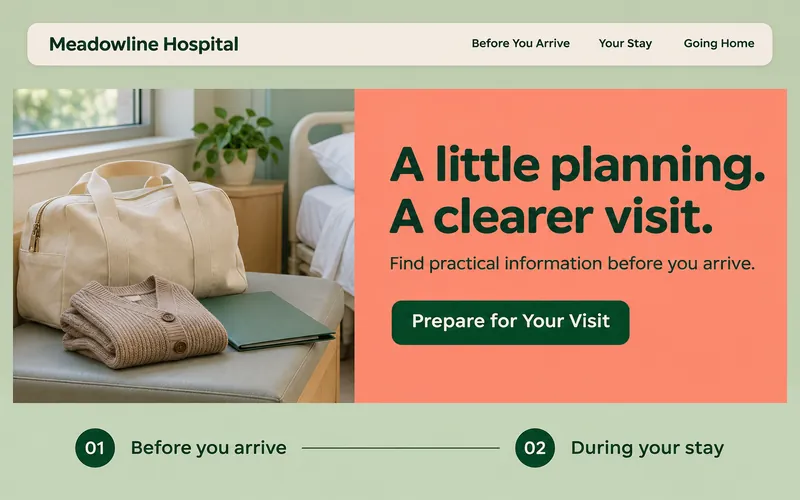
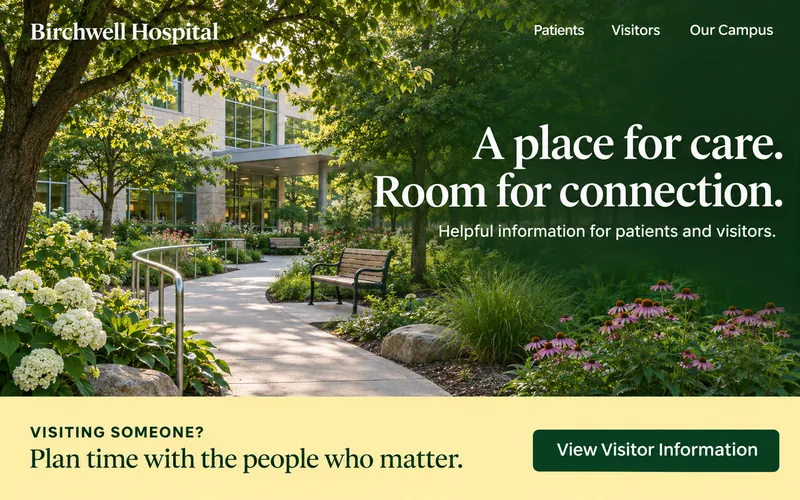
6 CONCEPTS FOR HOSPITALS
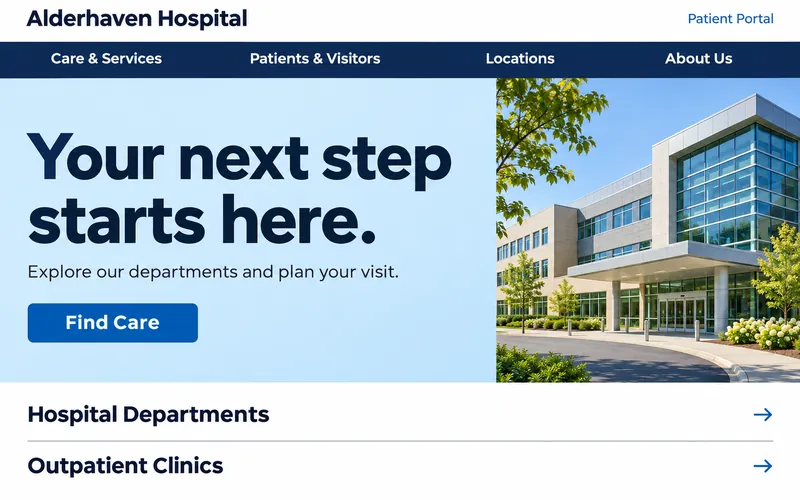
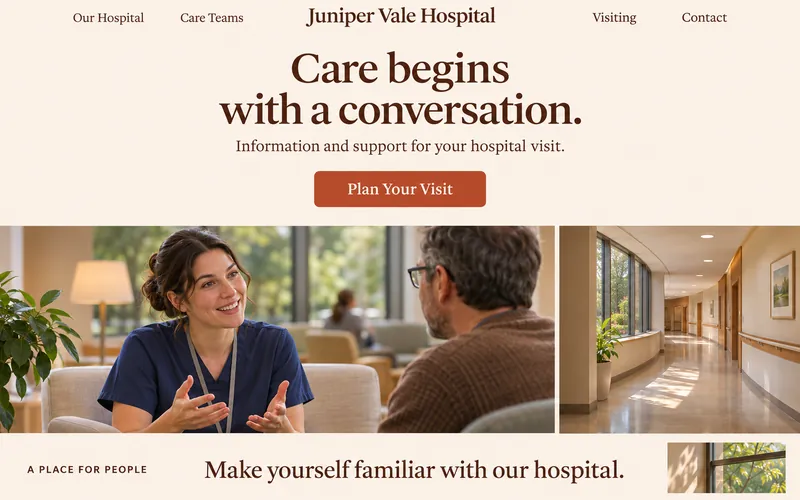
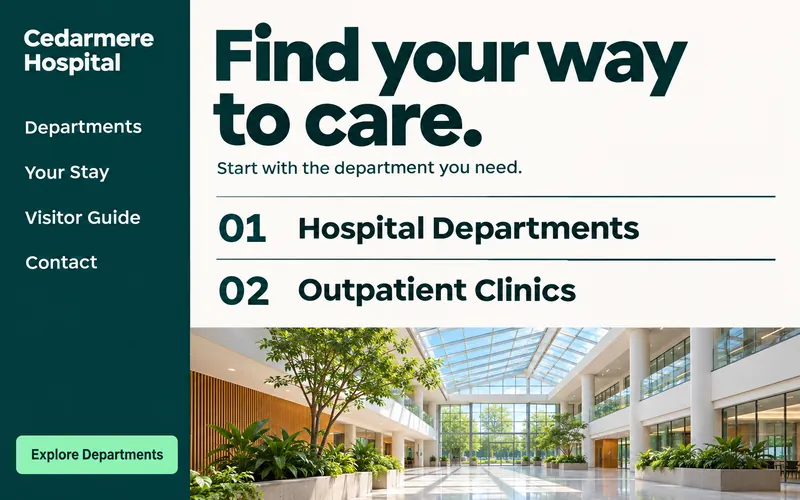
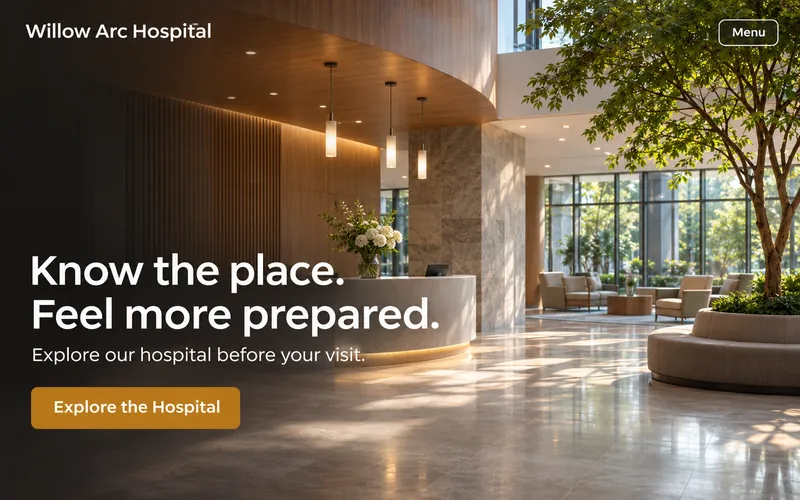
ONE SITE. DIFFERENT NEEDS.
A multi-specialty hospital, a facility with a narrow profile and a network of several locations need a different information system. We plan the website around actual services, admission methods and people who will use the website.
Patients should be able to find a department, clinic, admission requirements, or contact number without understanding your internal structure. We also plan space for organizational information, public records links, and accessibility information where required.
We'll clearly explain care options, diagnostics, your team, and appointment requirements. Insurance and self-pay information will reflect your actual services and policies, using content approved by the hospital.
We will link departments and clinics with the correct address, building and contact details. We will consider a search engine, filters and additional languages as options for a larger website. The scope depends on the scale of the institution and editorial resources.
FROM PATIENT NEEDS TO RIGHT INFORMATION
Example path: home page → clinic or branch → admission rules → appropriate contact. In addition to this route, we will plan information for the patient's relatives and institutional content. The menu is intended to help you find answers, even if there are a large number of pages.
Each entity may have a description of services, location, contact hours and admission policies. We will agree on a common layout of pages so that the patient knows where to look for the telephone number and organizational information. The data is approved by the facility.
Admission rules, documents to take, preparation for examinations, visits and patient rights will be given a clear place. We will implement the information provided by the hospital; medical instructions require approval by responsible persons.
We will assign telephone numbers to specific cases and units. We will show directions and entrances to several buildings. We will plan the transition to e-registration or the patient portal according to the capabilities of the system used.
Team information, news, documents, careers, and partner resources should not get in the way of patient information. We agree on the scope of those sections and links to public records. Not every topic needs its own menu item.
WHAT'S INCLUDED
We will agree on the design, pages, content migration and features needed by your facility. The quote will also specify accessibility requirements and how to check them. You know what materials the hospital prepares and which elements require additional arrangements.
Hospital identification, photographs and clear shortcuts to important information create a coherent whole. Three free concepts will allow you to compare directions before ordering website development.
We plan the structure, contrast, keyboard operation, descriptions of graphics and forms. We define WCAG criteria, documents, tests and a possible audit before development begins. The accessibility widget itself does not confirm website compliance.
We organize unit descriptions, admission rules and contact details. We agree on the number of pages and copy editing in the quote. The medical and organizational content is approved by the hospital.
We plan titles, headings and links between services, units and locations. When rebuilding, we analyze old addresses and redirects. Further SEO is a separate scope.
We will choose a method for updating messages, telephones and documents. The link to e-registration, embedding the tool and integration with the hospital system vary in scope. We check the supplier's capabilities before quoting.
Before launch, we check the agreed views, links, patient paths and acceptance criteria. After acceptance, we provide your login details and discuss editing, maintenance and responsibility for keeping the information up to date.
THE RIGHT CONTACT. A CLEAR NEXT STEP.
Registration for a clinic, contact with a branch and an administrative question lead to different people. The website should explain these routes. We will agree them with the facility, instead of submitting all cases to one form.
At the clinic we will show the registration number and service hours, at the branch - the appropriate contact. The call button on your phone will make it easier to use the number. The data and description of the purpose of each contact are confirmed by the hospital.
The patient should know how to start registration, what documents to prepare and where to report on site. We will describe the benefit paths separately if the facility applies different admissions policies.
We can link to your existing appointment system or patient portal. Embedding a tool or exchanging data requires a review of the provider, permissions, and integration scope. Your public website does not replace your clinical systems.
A general inquiry form should explain whom it reaches and what it is for. It is not used to send test results or medical records. Any clinical data workflows are assessed separately with your IT and data protection teams.
HOSPITAL MATERIALS. SIMPLE LANGUAGE.
We collect information that the patient needs before arrival, and the editorial office needs to update the website efficiently. We help organize materials and section names. The scope of writing, transferring content and preparing documents is specified in the quote.
We need current branches, clinics, tests, addresses and telephone numbers. We will establish a common set of data for individuals and the person who will confirm it. We will separate organizational information from medical recommendations.
Admission policies, visiting information, test preparation instructions, and documents should have an assigned owner and review date. Copy editing does not replace the hospital’s clinical approval. We do not write health guidance without approved sources.
Logos, photos of buildings, staff and role descriptions will be useful. We select materials intended for publication, with established rights of use. We do not need patient photos, test results or treatment documentation.
We will check the scope of files to be transferred and the need to adapt them. We will determine who changes messages, telephone numbers, hours and documents. We plan additional languages and the educational section along with the method of their verification and maintenance.
SEE THE DESIGNS. THEN DECIDE.
View three initial design and layout concepts for your facility. You will compare the presentation of units, patient abbreviations and contact information. This stage is free of charge, without a contract or deposit.
All you need is a description of the hospital, the address of the current service and the most important needs. You don't need to have a ready specification. Concepts will help you evaluate direction; we establish the detailed scope, requirements and performance conditions before the paid stage.
The free concepts show possible designs and layouts. Building and launching your website is a separate, paid stage that begins only after you approve the scope and price.
WEBSITE - PRICE AND SCOPE
The price depends on the number of units and pages, design, material migration, editing, accessibility and integration requirements. After the conversation, you will receive a custom quote. These scenarios help define scope; they are not ready-made price packages.
For a facility with a smaller number of units that wants to organize basic information and contacts. We choose the number of pages to reflect the actual structure of the hospital.
For a hospital with many units and a larger amount of content. The quote takes into account information management, migration and collection requirements.
For a facility that needs a search engine, several locations, languages or connections to the tools used. We recognize each option before pricing.
We price construction and maintenance separately. We will establish materials, features, tests, deadlines and revisions. We will discuss hosting, domain, licenses and costs of external systems. Maintenance, further content and further development require separate arrangements. Your first 3 design concepts are free.
FOUR STAGES. AGREED SCOPE.
First, we establish the goal, content resources and decision makers. The schedule depends on the scale of the website, integration and time for acceptance of materials. We confirm the terms of the paid stage before it starts.
We talk about individuals, patients, problems of the current website and the work of the editorial office. We collect requirements, analyze resources for migration and define pages and needed features.
You get three free directions for appearance and layout. You compare the presentation of information to the patient and provide comments. You decide whether you want to order the website build.
We confirm the price, schedule and acceptance criteria. We develop the selected project, implement approved content and agreed features. We include IT and accessibility requirements in the scope before development begins.
We verify patient paths, contact details, mobile layouts and established accessibility and integration criteria. After approval, we launch the website, provide access and discuss further service.
MIGRATION, EDITING AND ONGOING WEBSITE SUPPORT
A new branch, a change in telephone number or visiting rules require efficient updating. Before launch, we will determine who maintains the system, who is responsible for the content and how to outsource development. We will adjust further service to the facility's capabilities.
We list existing URLs, documents, and content to keep, then plan redirects, content migration, and the site switch. Domain, email, and links to connected systems are checked before the move.
We tailor editing access to the people updating announcements, phone numbers, and documents. Backups, technical updates, and ongoing assistance are defined in the website support agreement. New content also needs to be checked for accessibility.
A logical structure of services, units and locations forms the basis of SEO. We agree on ongoing SEO and new modules separately. Creating a website does not guarantee a Google ranking or a certain number of contacts.
REVIEWS
Feedback on the ideas, communication, and details that make a difference.
Łukasz really understood my business. The website feels clean and elegant, and it highlights what matters most.

DIRECT COLLABORATION
Website design backed by SEO and SEM experience.
I’m Łukasz Zaborski. I bring over 17 years of SEO and SEM experience, including projects for more than 200 clients across Poland and Europe, to each website I create. I consider how people find your business, compare services, and decide to get in touch.
At zaborski-pro.com, you work directly with me. I'm based in Poland and work remotely with U.S. businesses. Tell me about your services, current website, and goals. We'll agree on a scope that fits your business and coordinate communication around your time zone.
Tell me about your facilityYOUR BUSINESS. YOUR INDUSTRY.
Choose your industry. Explore website ideas, features, and answers to common questions.
QUESTIONS BEFORE YOU START
Answers about pricing, accessibility, content, and existing hospital systems.
Yes. Your three initial design and layout concepts are free, with no deposit, contract, or obligation to continue. A brief description of your business and goals is enough to start. Building and launching the website is a separate, paid stage that begins only after you approve the scope and price.
We prepare a custom quote for your project. Units and pages, the amount of materials to be transferred, the content editing tools, accessibility requirements and integrations are important. Before development, you will learn the cost of development and separately the costs of maintenance, license and ongoing support.
We set the timeline after reviewing the scale of the service, materials and requirements. The schedule takes into account migration, agreed testing and acceptance of content by the facility. Integrations may require the involvement of the system provider. We do not give a date without recognizing the scope.
Before quoting, we'll agree on accessibility requirements, testing, content responsibilities, and any independent review. We'll consider the U.S. requirements relevant to your organization and plan for accessible navigation, forms, and documents. A template or accessibility widget alone does not establish compliance. U.S. Department of Justice guidance on web accessibility.
We can link to your existing public records portal and assess any work needed to update it. Patient-facing content and public records serve different purposes. We confirm publication requirements, content, and editorial responsibility with your organization. A standard website page does not automatically replace a dedicated public records portal.
We can schedule a link to the tool being used. Widget embedding and full integration require checking documentation, vendor capabilities and IT requirements. We determine the scope, licenses and responsibility for data separately. The information website is not a medical records system.
A list of units and services, telephone numbers, locations, admission rules, patient documents, logos and photos intended for publication will be useful. We can start with the current site and the conversation. Do not send patient data, test results or medical records.
Yes, after determining the resources and scope of the migration. We will check the addresses, the validity of the materials and the need for redirection and adaptation of documents. We will discuss the domain, hosting, email and links to the systems you use. Transferring a large archive is a separate item in the scope.
If your team needs editing access, we account for that when choosing the website setup. We agree on which areas staff can edit, how the site will be handed over, and who approves content. You can also request help with updates. Website support costs and response arrangements are agreed on separately.
The agreed scope can include page URLs, titles, headings, and internal links that help people find your services. Content reflects your actual coverage and credentials. We do not guarantee search rankings, new clients, or a particular outcome in any legal matter.
There remain the costs of the domain, hosting and possible licenses or subscriptions from providers. We arrange technical support, new content, audits and feature development separately. Before development, we discuss recurring costs and responsibility for updates.
Let's talk about your hospital's website.
Get 3 Free DesignsLET'S TALK
Write what facility you represent and what the new service will facilitate. We'll provide three free design and layout concepts to help you choose your direction.
Share your current website, the size of your organization, and your main priorities. Let us know whether you need migration, content editing, a public records link, or online appointment booking. Describe your organization without sending patient data or medical records.

Łukasz ZaborskiYou'll work directly with me.