YOUR PRINT SHOP—— —— ——
PRINTING. WELL DESCRIBED.Your publication.
Your effort.
Your effort.
D↗
Readers need book details and buying options. Print customers need specifications, production choices, and a way to request a quote. We design websites for publishers & print shops that make key information easy to find and the next step clear. Start with 3 free design concepts before you commit to development.

Explore three design concepts before you commit to the website build.
No deposit or signed contract is needed to see your design concepts.
Choose a direction or walk away. There is no obligation to continue.
SEO/SEM EXPERIENCE. LEARNING ABOUT YOUR SERVICES.
I bring over 17 years of SEO and SEM experience, including work with more than 200 clients across Poland and Europe. I apply that experience to website planning: helping people find the site, understand what you offer, and take the next step. The brands and figures shown refer to my SEO and SEM work.
We are talking about publications, printing services and the people you are targeting. Is the reader supposed to find a specific title, the author to learn the working arrangements, and the company to send the printing specification? We also determine the role of the current store and ordering system. These answers provide the content, pages and necessary features.

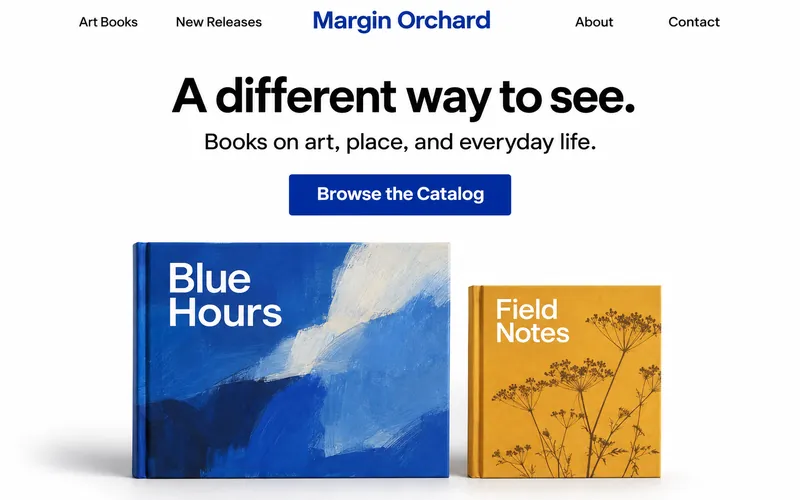
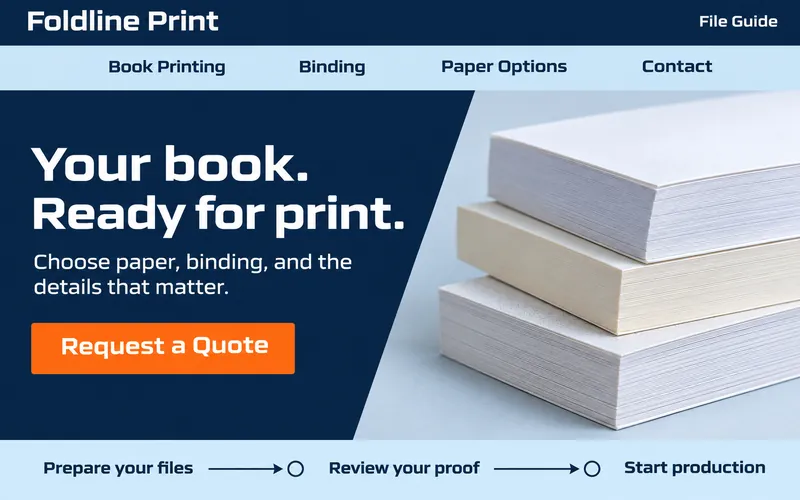
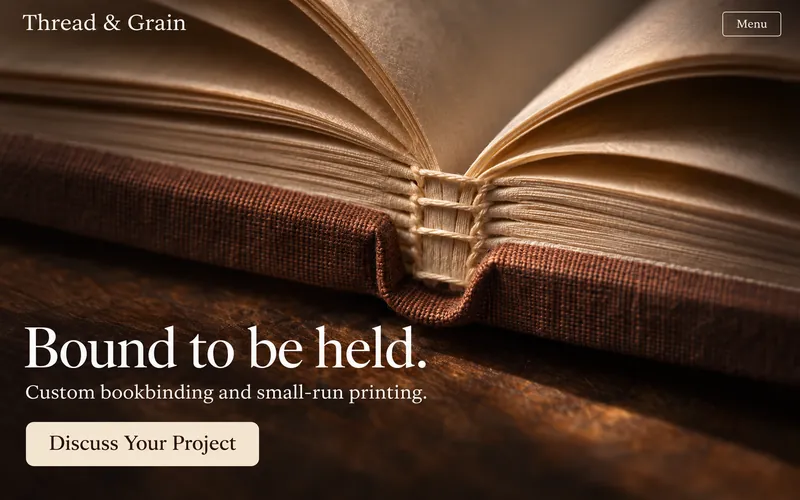
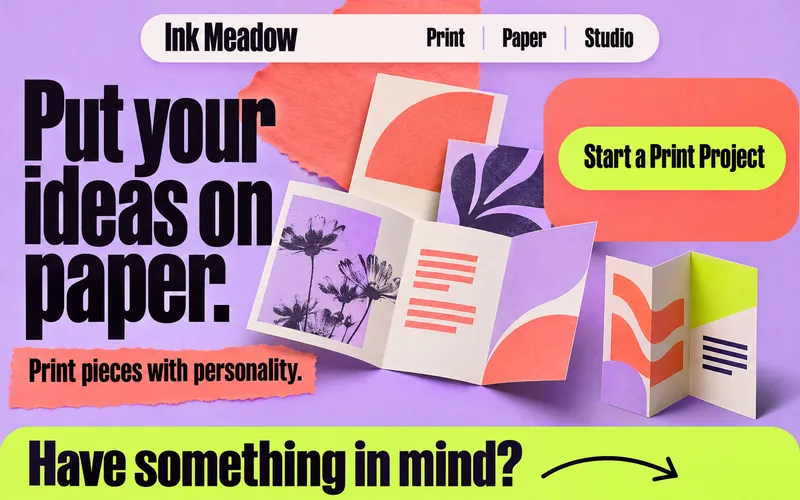
6 EXAMPLES OF DIRECTIONS FOR PUBLISHING AND PRINT SHOPS


YOUR INDUSTRY. YOUR CUSTOMERS.
Readers want to find books, authors may be seeking a publisher, and businesses need printed catalogs or packaging. We plan around your publishing or printing business model. If you offer both, we create clear routes to each service.
The catalog, series, authors and announcements help the reader find the right publication. The title card can link to your store or distributor. We will plan separate information and contact details for authors, bookstores and media.
We will show real products: books, catalogs, leaflets and labels. We will describe available formats, bindings and finishings according to your services. The client will check the feasibility and learn how to prepare data for quote.
When you run a publisher and a print shop, the reader should not look for a book in the printing pricing. We will divide the catalog of publications, printing services and collaboration with authors. A common identification will maintain brand consistency.
FROM FIRST IMPRESSION TO INQUIRY
For a publisher, the path may look like this: catalog → book page → place of purchase. For print shops: product → parameters and examples → request for a quote. We will select pages to suit your services, without expanding the menu with unnecessary items.
The book card may include cover, author, description, ISBN, format and available editions. Series and categories organize a larger catalog. We will arrange the search and filters according to the number of titles and the update process the data.
Dedicated pages for book, catalog, and packaging printing explain your ordering options. We present sizes, binding options, and finishes. Photos of samples with production details help customers compare choices.
File preparation instructions, templates and answers to frequently asked questions support the ordering party. The publisher may need rules for sending proposals, press materials and information for bookstores.
The title card will indicate the place of purchase, and in the case of printing services - the route to the quote. We will select editorial, sales and production contacts for your organization. The existing store or customer panel will receive a clear entrance.
WHAT'S INCLUDED
We will agree on the structure, design, materials and features needed by your company. The quote will explain what the service page or catalog includes and what requires separate examination: store, calculator, file transfer or connection to the ordering system.
We will combine the logo, covers and product photos with a clear presentation of what you offer. Three free concepts will allow you to compare catalog and service layouts before you decide on website development.
The reader should conveniently view the book page, and the print shop customer should also find the parameters and contact details on a phone. We check the layout, menu, buttons, visible focus and keyboard operation.
We will plan descriptions of publications or products, menus and contact paths. The number of cards, data import and editorial assistance will be specified in the quote. Bibliographic data and production capabilities are approved by your company.
We organize addresses, titles, headers and links between the catalog and what you offer. During the reconstruction, we will determine the necessary redirects. Ongoing SEO, content development and campaigns are a separate scope.
The form may collect the print specification and the title card may lead to the purchase. We check calculator, store, file transfers and integrations before quoting, along with vendor restrictions and fees.
Before launch, we verify information, links and agreed paths. After acceptance, we provide your login details and discuss catalog editing, renewals and responsibility for further service.
CONTACT TAILORED TO YOUR WORKFLOW
The reader wants to find a book and where to buy it. The person ordering the print needs a quote for its parameters. We'll break down these steps and show you what happens next. We will select automation only for a proven service process.
When publishing, we will plan a button leading to an active store or distributor. Your own store, pre-sales and sales of digital files require separate scope: payment, delivery, order processing and access rules.
The agreed form may ask about the product, format, number of pages, circulation, paper, binding and expected deadline. We will select the fields to suit your quote. The customer can also describe the need even if he does not know all the parameters yet.
The manual will explain when and how to transfer production materials. Transferring large files, their storage and automatic verification require separate arrangements. On the website you can also indicate the system you use.
A calculator makes sense if you have pricing rules and specific product variants. Connection to Web-to-Print or a production system requires checking documentation and access to integration. It is not the default addition to the site.
CUSTOMER LANGUAGE. SPECIFICATIONS ABOUT YOUR COMPANY.
A cover and synopsis help readers choose a book; sample binding photos and specifications help customers order printing. We organize your materials so visitors understand the options and next steps. Copy editing and data imports are defined in the quote.
Collect a list of titles, authors, series and editions. Covers, descriptions, bibliographic data and addresses of places of purchase will be useful. We will establish a common card layout so that new items can be added without rebuilding the entire catalog.
Prepare a list of products and available variants, photos of samples and manufacturing-approved instructions. Descriptions of formats, papers and bindings are intended to reflect the company's actual capabilities, also for non-standard orders.
We will select the logo, product photographs, covers and fragments of publications from materials intended for use on the website. We will show real references and examples of work with reliable descriptions; we will not attribute someone else's projects to the company.
Premieres, reprints and changes to what you offer require updating. We will determine who adds titles, corrects purchase links, and approves printing instructions. We will plan news or a newsletter if you have a purpose and people to run it.
SEE THE DESIGNS. THEN DECIDE.
See three design and layout concepts for your publisher or print shop. You will compare the presentation of publications, products and the path to purchase or inquiry. This stage is free of charge, without a contract or deposit.
Tell us about your company, customers, and main products or services. Share your current website and a few sample publications or products. You don’t need a detailed brief—the concepts help you choose a direction before committing to development.
The free concepts show possible designs and layouts. Building and launching your website is a separate, paid stage that begins only after you approve the scope and price.
WEBSITE - PRICE AND SCOPE
The cost is influenced by the number of pages and tabs, materials, content editing tools and features. A catalog with links to purchase has a different scope than a store or print ordering system. After the conversation, you will receive a custom quote. The scenarios below help you determine what you need.
For a company with a limited range of services that wants to present its activities and facilitate contact. The most important information can be found on one page.
For a publisher with many titles or a print shop with several product groups. Separate tabs and pages organize what you offer and its updates.
For a company planning its own sales or order automation. We will select the features after determining the process, data and capabilities of the tools used.
We price construction and maintenance separately. Your quote defines the pages, product listings, imports, copy, features, timeline, and revisions. Domain registration, hosting, licenses, subscriptions, and transaction fees have separate costs. Website support, new content, and marketing are scoped separately. Your first 3 design concepts are free.
FOUR STAGES. CLEAR ARRANGEMENTS.
We start with the purpose of the site, the materials and the current method of use. The schedule depends on the size of the catalog, features and time for approval. We confirm the price and terms of paid website development before starting this stage.
We discuss publications, print products, customers, and ordering. We review your current catalog, URLs, and systems, then agree on the pages, data, and materials needed.
You get three free directions for appearance and layout. You compare the way What you offer is presented and provide comments. You decide whether you want to order the website build.
We confirm the scope, price, deadline and revisions. We develop the selected project, introduce content and agreed features. You approve catalog data, offer and instructions for customers.
We verify mobile layouts, links and agreed paths. After approval, we launch the website and provide your login details. We discuss additions, renewals and continued support.
VISIBILITY, MAINTENANCE AND NEXT STEPS
A new series, reprint or another printing product should have its place on the page. We will determine how to update and further develop it. Maintenance, promotion and expansion of features are separate decisions, tailored to your needs.
Publication cards and product descriptions form the basis of information for search engines. We can discuss further SEO, guides and advertising separately. Just making a website doesn't guarantee rankings, sales or inquiries.
Before rebuilding, we will check the addresses of titles and products, materials and necessary redirects. We will determine how to transfer data and preserve the domain and email. We will include the existing store or panel in the change plan.
We will choose a method of adding titles, photos, prices and instructions to people operating the website. You can choose to manage content yourself or outsource changes. We will determine the scope of website support, renewal costs and responsibility for data before the start.
REVIEWS
Feedback on the ideas, communication, and details that make a difference.
Łukasz really understood my business. The website feels clean and elegant, and it highlights what matters most.

DIRECT COLLABORATION
Website design backed by SEO and SEM experience.
I’m Łukasz Zaborski. I bring over 17 years of SEO and SEM experience, including projects for more than 200 clients across Poland and Europe, to each website I create. I consider how people find your business, compare services, and decide to get in touch.
At zaborski-pro.com, you work directly with me. I'm based in Poland and work remotely with U.S. businesses. Tell me about your services, current website, and goals. We'll agree on a scope that fits your business and coordinate communication around your time zone.
Tell Me About Your BusinessYOUR BUSINESS. YOUR INDUSTRY.
Choose your industry. Explore website ideas, features, and answers to common questions.
QUESTIONS BEFORE YOU START
Answers about catalogs, files, integrations, and website costs.
Yes. Your three initial design and layout concepts are free, with no deposit, contract, or obligation to continue. A brief description of your business and goals is enough to start. Building and launching the website is a separate, paid stage that begins only after you approve the scope and price.
Your quote is tailored to the project. It includes pages, number of tabs, design, copy, data import and features. Catalog, store and print ordering system are different scopes. Before development, you will learn the cost of development and separate costs of maintenance, license and optional website support.
We set the timeline once the scope is clear and we know when your content will be ready. A large catalog, import or integration requires work other than a simple company presentation. The schedule takes into account your verification of data and approval of the project. You will meet him before the paid stage.
Start with your products or services, customers, logo, and current website. Publishers can share sample covers and title information; print shops can share products, sample photos, and approved instructions. Full manuscripts and production files are not needed for the first conversation.
No. Title cards can represent publications and link to an existing store or distributor. If you want to accept orders on your own website, we will arrange the shopping cart, payment, delivery, availability and sales support separately. Selling e-books also requires determining how the files will be delivered.
We recognize and evaluate such features separately. The calculator needs your pricing rules and product variants. We determine file formats, sizes, storage locations and handling methods. Automatic file check before printing is an additional feature; the form itself does not provide it.
First, we will check the solution used, documentation and the scope of available integration. Linking to the panel, embedding the tool and exchanging data require different work. Before the quote, we will determine the capabilities, responsibilities of suppliers and licenses or subscriptions. We do not assume that every system allows for full connection.
If you want to add titles, covers and announcements, we will take into account the editing access when choosing a solution. We will establish a common card layout and necessary fields. For a larger catalog, we will discuss import and the source of current data. You can also order changes as part of a separate support plan.
The agreed scope can include page URLs, titles, headings, and internal links that help people find your services. Content reflects your actual coverage and credentials. We do not guarantee search rankings, new clients, or a particular outcome in any legal matter.
We review your current website to identify content to move, data to import, and URLs to redirect. We plan for your domain, email, store, and customer portal to keep working. Migration depends on data access and the capabilities of your existing system.
There are the costs of the domain, hosting and possible licenses or subscriptions. The store and external tools may have their own fees, including transaction fees. We arrange website support, new materials, integration and promotion separately. Recurring costs are discussed before development begins.
Let's talk about your company's new website.
Get 3 Free DesignsLET'S TALK
Please state whether you run a publisher, a print shop, or combine both activities. Describe what the new website will facilitate. We will prepare three free concepts to help you choose your direction.
List your main publications or products, audience and current website. Specify whether you need a catalog, print inquiries or a connection to the store. All you need is a description of what you offer - no manuscripts or production files.

Łukasz ZaborskiYou'll work directly with me.